
SealHut · The fish-packing notebook
Best vacuum sealers for fish
Choose for wet fillets, long packs and the seafood-storage routine you can follow.
Fish brings a different set of packing questions: moisture near the bag opening, delicate fillets, sharp fins or bones, and whole packs that may be too long for a chamber. Start with those questions before comparing suction figures.
Fillet portions
Investigate controllable operation, clear bag placement and suitable supplies.
Whole fish
Measure the complete pack and check sharp-part protection.
Liquid-containing packs
Verify the right machine type and permitted packing procedure.
As an Amazon Associate, SealHut earns from qualifying purchases. This researched guide compares published features and listings; no hands-on test ranking, invented prices or shelf-life guarantee is claimed.
The quick answer
Compare external machines for fillets and a chamber for suitable liquid packs
For ordinary fillet portions, start with the INKBIRD INK-VS02 and Anova Precision Vacuum Sealer Pro. Their documented features give you controls and bag arrangements to investigate. Match those features to the exact model and food condition rather than assuming every moist setting behaves alike.
For a repeated liquid-containing job, investigate the supplied VEVOR chamber offer and its instructions. A chamber can change the packing method, but it also changes the usable space, maintenance and bench requirements.
A whole fish adds another question: will the complete pouch fit? A long pack may exceed a chamber’s placement area even when the advertised volume sounds generous. An external machine has different positioning requirements, which must also be checked.
Vacuum-packed fish has additional reduced-oxygen storage considerations. Do not assume it can remain chilled for extra days or be thawed inside a sealed vacuum pouch. See the storage and thawing guidance below.
Three different comparisons
The fish-packing shortlist
These candidates represent two external machines and a chamber option. Compare the exact Australian offer, bag system, cleaning access and manual before ordering. The products have not been tested side by side by SealHut.
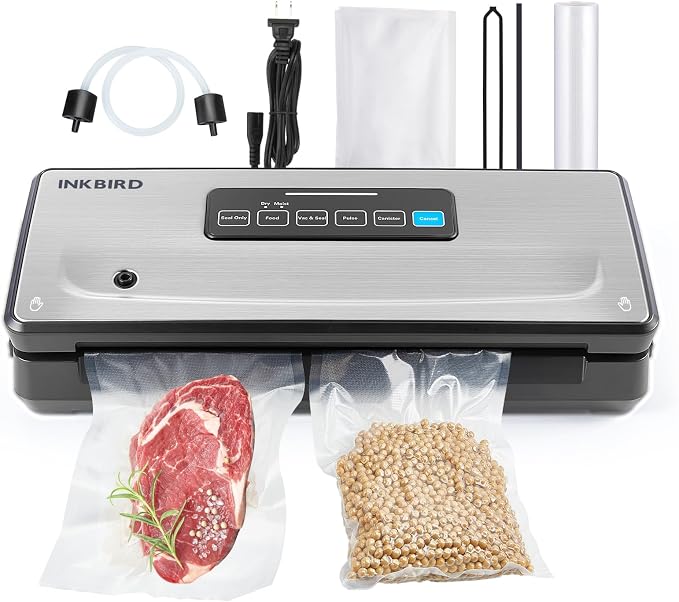
INKBIRD INK-VS02
INKBIRD documents dry, moist, pulse and canister operation, a cutter and roll storage. These are useful features to compare for portioned fish and varying bag lengths.
Investigate how the controls work with the exact food condition. Pulse control is not a measured guarantee against compressing a fillet, and a moist mode is not permission to let free liquid enter the machine.
Check: regional version, supported bag width, cleaning directions and pauses between cycles.
Check INKBIRD on Amazon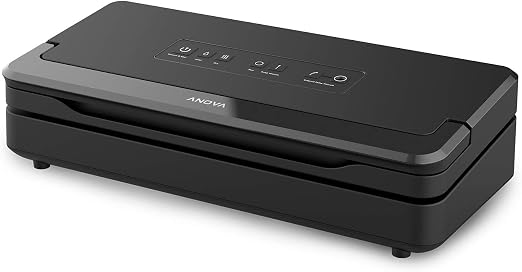
Anova Precision Vacuum Sealer Pro
Anova documents double sealing, integrated bag storage and a cutter, plus operation intended for wet foods. Compare these features with the INKBIRD’s controls and the actual supplies you need.
A double seam is a feature to investigate, not proof that every pack retains vacuum or resists punctures. Read the wet-food instructions rather than treating a marketing description as a complete procedure.
Check: Pro rather than standard model, AU version, current seller stock and exact kit.
Check Anova Pro on AmazonAnova Australian product page · Pro model guide. Manufacturer stock and marketplace availability can differ.
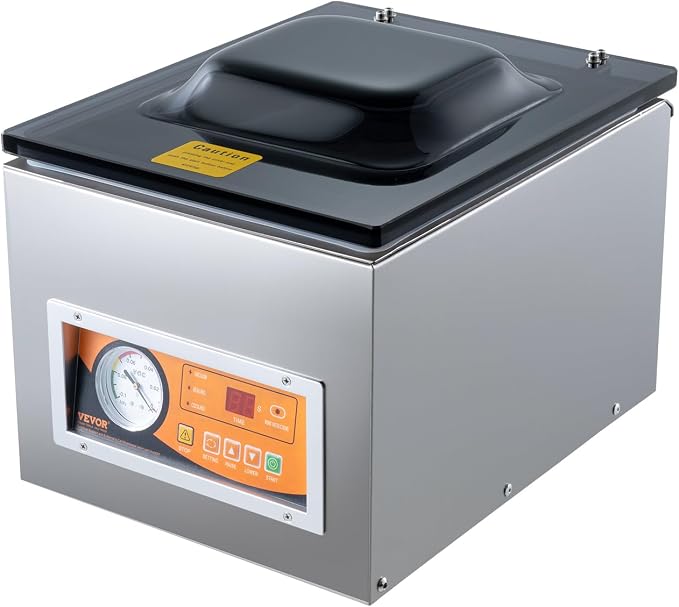
VEVOR 260mm chamber listing
The listing title describes a chamber machine with a 260mm sealing length and a 260W sealing-power label. Investigate the exact variant for liquid-containing packs that suit its permitted method.
Check the usable chamber, not just the exterior size or a power number. A complete fish pack needs the required position, opening width and lid clearance. Pump care is another model-specific question.
Check: exact model, inner dimensions, regional electrical version and maintenance instructions.
Check the VEVOR offerCompare chamber sealers and pouch fit. Sealing power is not the same as pump power or total electrical load.
Match the job first
Which fish-packing system should you investigate?
This selector suggests a comparison and the checks to make. It does not approve a food process or establish a machine’s capacity.
Moisture and delicate portions
Look for a packing method you can control
Read the model’s food-mode instructions before comparing labels such as moist, wet or pulse. What does each setting change? Which food conditions does the manual permit? How do you stop the cycle correctly?
Keep the clear bag-opening area required by the instructions. A wet fillet and a bag holding a pool of liquid are different packing conditions. Do not assume a moist setting makes them interchangeable.
For delicate fillets, compare the controllable operation described in the manual. The machine still needs compatible bags and correct positioning. No advertised vacuum figure establishes that every texture remains unchanged after packing.
Inspect the completed seam and pouch before storage. If the seal looks incomplete or the bag is damaged, investigate the system according to the instructions rather than repeatedly pumping a questionable pack.
Whole fish and awkward shapes
Measure the pack, not just the fish length
A whole fish can be long, deep and irregular. Measure the pouch once it is positioned as required, allowing for the food thickness, sealing area and any approved protection around sharp parts.
The opening must fit the supported seal length. For a chamber machine, the complete pouch also needs to fit the usable chamber shape and lid clearance. A large volume label does not answer those questions.
For an external machine, check how the bag is supported while its mouth is positioned in the vacuum area. A long portion may need a suitable bench arrangement. The machine body alone is not the working footprint.
Do not fold a wide bag mouth onto a shorter seal bar or force a thick portion into a shallow chamber. Find the exact maximum-pouch guidance and placement drawing before deciding the machine suits your usual packs.
Fins, bones and sharp parts
A second heat seam does not prevent a puncture in another part of the bag. Choose packaging suitable for the cut and follow the instructions for any approved protection. Do not improvise with materials that are not intended for food packaging.
If these packs are a regular job, solve the pouch specification first. More suction is not a substitute for a bag that suits the shape and sharp parts.
Plan supplies before packing
How many fish bags can you cut from a roll?
Enter a cut length that already includes the allowance required for both seals and positioning. The tool estimates quantities and roll-purchase cost; it does not determine whether the fish physically fits the bag.
Starting figures are editable examples, not product prices or recommended bag dimensions. Use the same roll width and material when comparing costs.
A repeatable packing session
Keep the fish cold and the packing job organised
- Choose portions before choosing bags.Decide which pieces you will use together. Weight arithmetic cannot make every fillet the same shape. Compare the actual portion with the bag and machine requirements.
- Set out compatible supplies.Identify the bag material, width and sealing allowance. Prepare the required packing area so you are not searching for supplies while seafood is out of cold storage.
- Keep raw seafood separate.Use safe handling practices for hands, utensils and surfaces. Keep raw seafood and its juices away from ready-to-eat food.
- Use the exact permitted packing method.Read the machine directions for the food condition, cycle settings and pauses. A product’s wet-food claim is not a full operating procedure.
- Inspect, label and store appropriately.Check the completed bag, record the food and packing date for organisation, and follow storage directions. The packing date does not create a new use-by date.
- Clean and dry the equipment.Use the specified cleaning procedure. Follow the bag instructions for its previous contents rather than assuming a reusable label permits every reuse.
Fish-specific storage checks
Vacuum packaging changes the oxygen environment
Use Australian seafood-safety guidance for buying, handling and cold storage. Keep perishable seafood at 5°C or colder and separate raw seafood from ready-to-eat food. Follow the food’s storage instructions.
Removing air does not sterilise fish. Reduced-oxygen fish packs need appropriate controls; an ordinary refrigerator temperature alone is not a reason to promise extra storage days. For a home freezer-packing routine, freeze promptly and keep the packs frozen rather than using vacuum sealing to extend chilled storage. See the FDA’s reduced-oxygen fish handling guidance for further evidence of the packaging controls; this is supplementary guidance, not Australian law.
Open the vacuum pack before refrigerator thawing
Follow commercial package-specific thawing instructions, including any requirement to remove fish from reduced-oxygen packaging. For home vacuum-packed fish, remove it from the vacuum pouch before thawing in the refrigerator, keeping the fish separate from ready-to-eat food and containing drips.
Do not treat sealed vacuum-pouch thawing as a default method. The US FDA Food Code specifically addresses removal from reduced-oxygen packaging for frozen-labelled fish before refrigerator thawing. We cite that as supplementary evidence of the packaging issue, not as Australian law.
Use NSW Food Authority seafood-safety guidance, FSANZ food safety basics and the FDA Food Code, section 3-501.13(E) alongside the food instructions.
Ownership and cost
Compare the routine, not only the machine price
For a few fillet packs at a time, a straightforward external machine may be the easier ownership choice. Compare cleaning, controls and replacement bags before paying for features you rarely use.
For larger sessions, read the exact cycle pauses and maintenance requirements. A powerful pump or a manufacturer’s batch claim does not establish unlimited output under every food condition.
For a chamber machine, include the permanent bench space, open-lid clearance, weight and pump care. Check whether the whole pouch fits before comparing bag-price savings.
Roll costs depend on the cut length you actually need, not just a low price for a roll. Compare equivalent widths and compatible materials. A smaller leftover does not prove that the bag size is right for the fish.
Choose the repeated job
Fillets, long whole packs and liquid-containing portions can point to different checks and machine types.
Choose usable supplies
The correct material, width and seal allowance matter more than an impressive pack count.
If budget is the main constraint, use our budget sealer guide. If you need to carry equipment between locations, use the portable guide; a home chamber machine is a different purchase.
Practical answers
Vacuum sealers for fish FAQs
Which vacuum sealer should I compare first for fish?
For ordinary fillet portions, compare the INKBIRD INK-VS02 and Anova Precision Vacuum Sealer Pro using their exact manuals and compatible bags. For liquid-containing packs, investigate the supplied VEVOR chamber listing. These are researched candidates, not winners from a hands-on comparison.
Does a moist-food mode mean I can vacuum seal a bag of liquid?
Do not assume that a moist mode permits free liquid to enter an external sealer. Follow the exact model instructions. For repeated liquid-containing packs, investigate an appropriate chamber machine and its permitted procedure.
Can I thaw vacuum-packed fish without opening the pack?
Follow the product-specific thawing directions, including any requirement to remove the fish from reduced-oxygen packaging. For home vacuum-packed fish, remove it from the vacuum pouch before thawing in the refrigerator and keep it separate from ready-to-eat food. Do not assume sealed-pouch thawing is appropriate.
Does vacuum sealing make fish safe without refrigeration?
No. Vacuum packing does not sterilise fish or replace cold storage. Follow seafood storage instructions and Australian food-safety guidance. Do not use vacuum packaging to extend chilled storage beyond a validated procedure.
Can a second seal prevent fins or bones puncturing the bag?
No. A sealing seam and a puncture elsewhere in the pouch are different issues. Use suitable packaging and follow the instructions for any approved protection around sharp parts.
Does chamber volume tell me whether a whole fish will fit?
No. Check the total pouch length, opening width, filled thickness, usable chamber shape and lid clearance. The whole pack must fit in the position required by the exact machine.
How long should I cut a roll bag for a fillet?
Measure the filled portion and include the allowance required for both seals and positioning. Do not use fillet length alone as the cut length. The roll planner estimates quantities from the cut length you enter; it does not validate fit.
Are vacuum bags suitable for cooking fish sous vide?
Only use bags specified for the intended cooking temperature, duration and method. Use a validated cooking procedure. A freezer-safe label or a vacuum machine does not establish cooking suitability or safety.
Can vacuum packing create extra safe fridge-storage days?
Do not assign extra days simply because air has been removed. Vacuum-packed fish needs appropriate storage and thawing controls. Follow the food instructions and validated guidance; this guide does not provide a universal shelf-life extension.
Before placing the order
Confirm these details against your actual fish packs
- Exact model, AU electrical version and seller bundle.
- Permitted wet-food or liquid-packing procedure.
- Supported pouch opening width and complete filled-pouch fit.
- Approved protection for sharp fins, bones or awkward cuts.
- Cleaning access, cycle guidance and required maintenance.
- Compatible bag supplies and delivered purchase cost.
Start with the fish and its pack
Compare external controls for ordinary fillets, the whole pouch’s dimensions for long packs, and the correct procedure for liquid-containing food. Keep the storage and thawing plan separate from the machine’s features.
Sources and research method
How this guide was put together
We compared the INKBIRD INK-VS02, Anova Precision Pro and VEVOR listings and product images. We checked named-model manufacturer features and Australian seafood-handling guidance. Exact seller versions, bundles and current prices still need confirmation.
The recommendations match system types to packing tasks. We have not measured seal retention, vacuum pressure, freezer-storage life or comparative batch performance. The roll planner performs stated arithmetic and does not validate pouch fit.
- INKBIRD: INK-VS02 features and manual
- Anova: Precision Vacuum Sealer Pro
- SealHut chamber guide: VEVOR model checks and source links
- NSW Food Authority: seafood safety
- FSANZ: food safety basics
- FDA Food Code: section 3-501.13(E), reduced-oxygen packaged fish thawing
Read our affiliate disclosure. Prices, sellers and availability can change. Illustrations explain packing considerations and are not evidence of product testing.