
SealHut · Researched model review
FoodSaver VS2198 review: is Cut & Seal the right fit?
A straightforward roll-based system for home portioning. Its value depends on your bag routine, the price of the exact kit and whether you need controls beyond ordinary packing.
Our buying verdict
Put the VS2198 on your shortlist if you regularly make bags to different lengths and want a single place to organise the packing job. Compare another model if delicate-food control or repeated liquid-containing packs is your main priority.
This is a documentation-based review. We have not tested suction, seal durability, noise or long-term reliability.
Check VS2198 on Amazon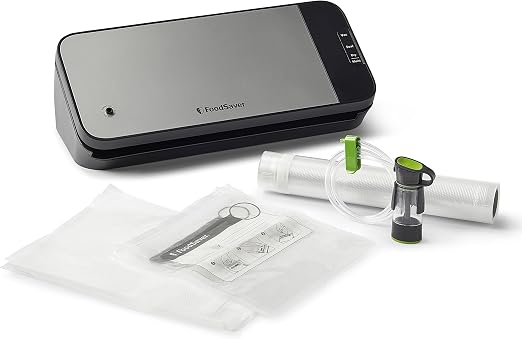
Quick answers
FoodSaver VS2198 FAQs
What is the FoodSaver VS2198?
It is the FoodSaver Cut & Seal external vacuum sealer. Match that model number when comparing seller offers and manuals.
Is this a hands-on VS2198 review?
No. This is a researched buying review based on manufacturer information and the model-specific manual. We have not measured its performance.
Is the VS2198 the same as the VS4500?
No. They are different model numbers. A VS4500 seller link or product photograph should not be presented as the VS2198.
Does it have a pulse mode?
The documented VS2198 controls do not list a dedicated pulse programme. If that feature matters, compare the exact controls of another model.
Can I use it for sous vide?
Check the exact bag’s approved cooking conditions and a validated cooking method. The packing machine does not determine cooking time or establish food safety.
Does the roll calculator predict actual bag yield?
It estimates straight cuts from your dimensions. It excludes setup waste, rejected seals, food thickness and practical handling allowances.
Will vacuum sealing make food safe without refrigeration?
No. Vacuum packing does not sterilise food. Follow its safe handling, refrigeration or freezing requirements.
Should I buy the cheapest VS2198 offer?
Compare the delivered total, correct regional version, included supplies, seller support and current terms. A lower headline price can describe a different bundle.
Start with the model
What you are actually comparing
The VS2198 belongs to the external-sealer category: the bag opening sits at the machine while the filled portion stays outside. That is a useful starting point for a buyer comparing everyday kitchen machines with chamber systems. The packing arrangement affects the bags you buy, the bench space you use and the types of food condition you need to consider.
The supplied Amazon title names VS2198 but also mentions pulse, marinate and sous vide settings. FoodSaver’s VS2198 documentation lists dry and moist settings. Confirm the model number and controls with the seller before purchase; this review follows the VS2198 documentation.
Its appeal is organisation. If your packing routine currently involves finding a roll, measuring material, looking for scissors and clearing a place to work, a machine that gathers those tasks together is worth investigating. That is an assessment of the workflow, not a claim that this model has beaten another machine in a timed test.
The important question is whether those conveniences solve your repeated job. A person making a few differently sized freezer portions has a different need from someone packing fragile snacks, sealing containers every day or working through a large batch with free liquid. Start with the task before deciding which feature list looks more impressive.
For the broader choice, read our Australian vacuum sealer guide. Use this page to narrow the decision to the exact Cut & Seal model.
Manufacturer details
The confirmed specification snapshot
| Detail | Published information | Buying implication |
|---|---|---|
| Operation | Lock lever; vacuum and seal controls | Check the latch action and access on your bench. |
| Bag preparation | On-board roll storage and cutter | Useful to compare for variable-length pouches. |
| Accessories | Hose adaptor; container and zipper-bag support | Verify the matching accessory system. |
| Starter supplies | 27.9cm roll, five pre-cut bags, five zipper bags, hose | Confirm the actual seller’s kit. |
| Other details | Removable drip tray; progress lights; cord storage | Investigate cleaning and storage access. |
| Dimensions / weight | 140 × 200 × 420mm; 2.16kg | Confirm axis orientation and working clearance. |
| Electrical / guarantee | 100–120W; 24-month replacement guarantee | Check the regional unit and current terms. |
Source: FoodSaver Australia’s model page. The numbers describe the listed appliance, not a measured review sample. Do not treat the listed dimensions as the space needed with the lid open and a filled pouch positioned in front.
Workflow assessment
Where Cut & Seal makes sense
The strongest reason to investigate this model is a regular roll-based routine. When portions vary, cutting the length yourself can be more convenient than keeping several sizes of ready-made bags. The convenience has a limit: changing the length does not change the roll width. A bulky portion can still call for a different bag format.
Think about three familiar jobs: splitting a bulk purchase into meal-sized portions, preparing packs that stack predictably in a freezer, and making a longer pouch for something you expect to open and reseal when permitted. These jobs make bag preparation a recurring part of the process. That is where an organised station can earn its place on the bench.
Ready-made bags may still be simpler for uniform portions. Buying a roll-based machine does not mean every pack must be made from a roll. Compare both supply options using the usable size you actually need and the delivered cost of replacements.
Controls and limits
Two settings are not every kind of food control
A short control panel can be an advantage when you want a familiar sequence rather than several programmes to choose between. It can also be a reason to compare another machine if you want a specific capability. Identify the missing control by name and check the next model’s manual, rather than assuming that a higher price resolves it.
Delicate foods are a good example. If preserving their shape is central to your routine, investigate a machine with documented control over air removal. The VS2198 manual’s stated controls are your reference; do not borrow a pulse feature from another FoodSaver model and add it to this one’s description.
Liquid-containing packs deserve a separate decision. An external machine has a different packing arrangement from a chamber. A food-setting label is not a general instruction to let free liquid enter the appliance. Work from the model’s food-preparation directions. If liquids dominate the job, read our chamber comparison before buying.
Likewise, a domestic machine should not be selected on an assumed unlimited batch rate. Match the operating routine and cooling instructions to the amount of work you intend to do. More bags in a starter kit do not establish that they can all be sealed consecutively without pauses.
Use the model-specific guide
The manual details that affect ownership
The VS2198 guide specifies a 20-second wait between seals and at least 7.5cm of clear bag material above the contents. It also directs users to avoid storing the latch in OPERATE, which can compress the gaskets. These details matter when planning a session and putting the machine away.
Consult the complete VS2198 user guide for the actual loading, accessory, cleaning and food-preparation sequence. This review is a buying aid, not a replacement operating manual.
Before buying, clear the spot where you would use it and put a representative filled pouch there. Consider the reach to the controls, whether the lid can move freely and where finished portions will go. A machine can fit a cupboard but still be awkward to use in the only available working space.
If you will move it every time, consider the whole routine: retrieving the machine, setting out supplies, packing, cleaning and putting it away. That repeated effort often matters more than a difference of a few centimetres in the closed-body measurements.
Use your own dimensions
How many pouches might your roll produce?
The planner below is a simple way to compare cuts and consumable cost. It uses a length you enter for the finished pouch plus a combined allowance for seams and handling. It does not determine the correct allowance for your food or replace the manufacturer’s instructions.
The starting values are arithmetic examples. They are not the length or price of the included starter roll. All cuts use the same roll width, which is outside this calculation.
If your result looks attractive, check it against one real pouch before ordering several rolls. Food shape, loading space and the opening you need can change the practical cut length. A calculated count is useful for comparison, but the finished pack is the better check.
Supplies beyond the starter kit
Compare replacement costs before the machine price
A starter bundle gets the first session underway; replacement supplies determine the longer-term routine. Record the roll width, bag type and accessory system you expect to use again. Then compare equivalent supplies instead of choosing whichever packet has the largest count on its front.
Calculate cost per usable pack, including delivery. If one bag is too narrow for your normal portions, its low unit price is not a useful saving. If a roll produces practical lengths for those portions, compare the material consumed per pack rather than the nominal roll length alone.
Decide whether you will actually use the container route. Buying extra containers simply because the machine supports accessories adds a second spending decision. Start with the use case: something you repeatedly open, a suitable portion you want to keep in a rigid vessel, or a packing task where a pouch is inconvenient. Check the exact compatible accessory instructions.
Avoid estimating the machine’s payback from food you might theoretically save. First identify a real problem in your current routine. Packaging only delivers value if you use the finished portions, keep track of them and handle them correctly. The machine purchase and the food-planning habit are separate parts of that decision.
When a pack looks wrong
A practical troubleshooting starting point
A disappointing pack is a reason to inspect the setup before assigning a cause. A machine fault, bag mismatch, loading problem and damaged pouch can produce similar-looking results. The selector below points you toward the relevant manual section; it does not diagnose an electrical fault.
For recurring problems, write down the bag product, food condition and exact sequence you used. Record whether the issue appears with different compatible supplies. This gives support a clearer description than saying only that the machine is weak or the vacuum does not last.
Keep a distinction between inspection and repair. Checking a pack and consulting the manual is part of ordinary ownership. Opening the appliance or improvising a repair is a different task. Use manufacturer support for suspected damage and faults.
Separate the packing and cooking jobs
Food safety and sous vide
Vacuum packing does not sterilise food or replace refrigeration. Follow the food’s handling and storage requirements. Do not create a new use-by date from a freshness claim, and do not use appearance or a tight-looking pouch as proof that the contents are safe.
For sous vide, confirm that the exact pouch supports the intended cooking temperature and duration. Then use a validated process appropriate to the food and its dimensions. A bag that can be sealed successfully is not automatically approved for every cooking use.
See NSW Food Authority’s sous vide guidance and our sous vide equipment guide. For food-specific buying considerations, use the meat and fish guides.
The purchase decision
Who should shortlist the VS2198?
Shortlist it when the ordinary packing routine is the priority: compatible bags, changing portion lengths, a manageable home session and a working space that suits the appliance. Compare the delivered offer with another external model using those same requirements.
Compare something else when a particular missing capability is central to the job. If you need delicate-food control, investigate that exact control. If your repeated task is liquid packing, investigate the packing system. If storage space is the issue, measure the whole setup rather than looking for the smallest product photo.
Before ordering, confirm the seller’s model number, regional electrical version, kit contents, replacement supplies and current support terms. Keep the listing and receipt. The exact offer matters more than a familiar brand name attached to a different machine.
Our final assessment
The VS2198 is worth comparing for an organised home bag-making routine. Its documented convenience features give it a clear purpose. We cannot claim a performance winner without comparative testing, so buy on the match between your repeated job, the actual bundle and the delivered price.
Check VS2198 on AmazonResearch and next steps
Sources, scope and related guides
This review uses the FoodSaver Australia VS2198 page and model-specific user guide. Buying assessments are our interpretation of the documented features, not observations from a tested unit. We do not publish a star rating, durability score, measured vacuum strength or unverified shelf-life promise.
The roll planner is arithmetic based on your entries. The troubleshooting selector is a reading aid. Neither tool tests the actual machine, approves supplies or certifies a food process. Check updated instructions and the current seller offer before acting on a specification.
SealHut may earn commissions from qualifying purchases through affiliate links elsewhere on the site. We may earn a commission when you purchase through the Amazon links on this page. Manufacturer links are provided as research sources. Read our affiliate disclosure.