
SealHut · FoodSaver model review
FoodSaver VS3198 review: when the extra controls matter
Controlled Multi Seal is worth comparing when your routine goes beyond ordinary freezer portions. Decide whether its added controls and accessory system solve jobs you actually repeat.
Check VS3198 on AmazonWe may earn a commission from qualifying Amazon purchases. This is a researched review, not a hands-on performance test.
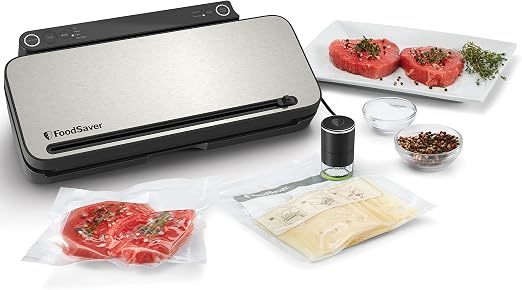
Our verdict: shortlist it for a varied packing routine
The clearest reason to compare the VS3198 is a need for more control and more than one packing route. If you only prepare straightforward portions, compare the total cost with a simpler machine before paying for features you may rarely use.
Read this first
FoodSaver VS3198 quick answers
What is the FoodSaver VS3198?
It is the Controlled Multi Seal model, an external bag sealer with an accessory packing route. Check the exact model number when comparing offers.
Has SealHut tested the VS3198?
No. This review assesses manufacturer documentation and the supplied listing. It does not report measured suction, noise, durability or comparative seal performance.
What makes it different from the VS2198?
The main documented distinction is its broader control set. Compare the intended tasks, exact kit and delivered price rather than treating the model numbers as interchangeable.
Is the handheld part a cordless sealer?
No. The documented VS3198 accessory system is built into the mains-powered appliance. It should not be confused with a separate rechargeable handheld device.
Does its sous vide setting cook food?
No. The sealer prepares packaging. The cooker, exact cooking-approved bag and validated food method remain separate decisions.
Does Marinate mean I can vacuum free liquid in an ordinary bag?
No. Consult the exact accessory and food-preparation instructions. A programme name does not authorise a different packing arrangement.
Does the upgrade calculator predict food savings?
No. It divides your entered purchase-price difference by the number of relevant sessions you estimate. It does not calculate food savings, payback or performance.
Does the packing planner calculate cooking time?
No. It estimates sealing operations and between-operation cooling from your inputs. It excludes preparation, cleanup and cooking.
Should I choose the VS3198 for commercial production?
Do not infer commercial production suitability from a seal-quality phrase in a listing. Match the machine’s intended use, operating limits and support to the job.
A reason to upgrade
Buy the control you need, not the longer feature list
A more capable vacuum sealer can make sense without being the best purchase for every kitchen. The useful comparison starts with a short list of jobs: the food you pack, the packaging you prefer and how often the routine changes. A machine with extra programmes deserves a place on the shortlist when those programmes address that list.
For an occasional batch of similar freezer portions, the simpler sequence may be enough. For a kitchen switching between ordinary bags, shape-sensitive food and compatible accessories, the controls deserve a closer look. That is our buying interpretation of the documented design, not a finding from side-by-side tests.
The VS3198 is an external system. The filled portion stays outside the appliance while the bag opening is positioned at the sealing area. A chamber machine is a different purchase with different pouch-fit and maintenance questions. If you mainly want to pack food with free liquid, start with our chamber vacuum sealer guide.
The question for this FoodSaver is more specific: will you use its additional control and accessory route often enough to justify the actual seller’s price? The two planners below make the arithmetic visible without assigning invented performance scores.
Published model details
What FoodSaver documents for the VS3198
The listed starter kit includes a 27.9cm roll, five pre-cut bags, five zipper bags and an accessory hose. Check the actual offer because bundles and regional versions can differ.
Treat the specification sheet as a starting point for inspection. A closed-body measurement does not describe the space needed to open the lid, position a filled pouch and set down finished packs. Confirm the orientation of the dimensions before using them in a shelf or bench comparison.
A power figure is not a measured speed result. It does not tell you the cycle time for your portion or establish how many packs you can complete consecutively. Those questions need the operating instructions and, for performance claims, actual testing.
Source: FoodSaver Australia’s exact-model page. Current prices and availability are left to the Amazon offer rather than hard-coded into this review.
Explore the packing routes
What do the controls change?
Select a control to see its documented role and the buying question it raises. This is a reading aid, not a control panel for the appliance. The full manual remains the reference for the operating sequence.
For a buyer, the distinction between the bag and accessory routes is more useful than counting every label together. You may want a feature that requires a particular container, which adds a supply and storage decision. Identify that requirement before treating the machine alone as the whole purchase.
The everyday case
Where the added control could earn its place
Start with the food shape you want after packing. If your routine includes portions that can tolerate ordinary air removal, extra control may be less important. If preserving shape is a repeated requirement, a manually controlled option is worth investigating. The useful test is whether you can operate it comfortably and consistently with the actual packaging.
That does not mean a programme guarantees an undamaged pack. Bag fit, loading, the food’s condition and your judgement remain part of the task. Compare the documented control with the requirement you care about instead of converting its presence into a performance claim.
Next, consider how often you switch formats. A pouch can be convenient for a portion you intend to keep closed. A suitable rigid accessory can be worth comparing for a task that involves repeated opening. These are different routines, so choose the format before deciding whether the integrated accessory system adds value.
Finally, think about the person using the machine. A clear, repeatable sequence matters if several people will pack food. Extra choices help only when users understand which controls belong to which route. Keep the manual nearby while learning the routine, and choose supplies that are easy to identify.
A narrower comparison
FoodSaver VS3198 versus VS2198
Both models deserve comparison for a roll-based home routine. The upgrade question is whether the broader control set addresses a task the simpler model leaves unresolved. A higher model number alone is not a reason to change machines.
| Your priority | How to compare |
|---|---|
| Ordinary freezer portions | Check the whole packing routine and replacement supplies. Extra programmes may have limited value here. |
| Shape-sensitive food | Investigate the exact manual control and how you would use it. |
| Accessory-based tasks | Identify the compatible vessel, connection and required procedure. |
| Cooking preparation | Keep packaging approval and the validated cooking method separate from machine selection. |
| Delivered purchase cost | Compare the regional unit, seller kit, delivery and any needed supplies. |
Use our VS2198 review for that model’s documented limits. Do not copy the VS3198 control list onto the VS2198 because a marketplace title mixes the names.
If you already own a working sealer, describe the problem before considering an upgrade. Is it missing control, awkward bag preparation, inconvenient accessory handling or a fault that needs support? An upgrade can solve a capability gap. It should not be the automatic response to an unexplained loading or maintenance problem.
Make the price difference tangible
What does the upgrade cost per relevant session?
Enter the actual delivered prices and estimate how often you would use a capability that matters to you. The result spreads only the extra upfront cost over those sessions. It is a way to view the premium, not a prediction that the machine will save money.
Count relevant sessions, not every bag. A session only belongs in this comparison when the capability is a real reason you would choose the more expensive option. Starting prices are zero so you can enter the offers you are comparing.
A small number per session does not prove the upgrade is worthwhile. It simply shows how frequency changes the way the upfront premium looks. If you rarely need the capability, buying more compatible supplies for a simpler machine may suit your routine better.
Packing is more than the vacuum cycle
Plan the sealing work in a session
Ready-made pouches and pouches made from a roll involve different amounts of seam-making. The planner counts one final closing operation per pouch, plus one bag-making operation for each roll-made pouch. It assumes each roll-made pouch starts with an open end and ignores material already prepared at the beginning of a session.
The manual specifies 20 seconds of cooling after use. Enter your own observed operating time for each type of operation; the example timings are not tested VS3198 results. Cooling is included between operations, with no final wait counted as active session time. Still follow all actual operating and cooling instructions after the final operation.
Use the result to understand the workload, not to rush the food-handling plan. Even a short machine cycle can sit inside a much longer preparation and cleanup session. A larger batch deserves a plan for supplies, work space and safe handling before you start.
Working space
Measure the session, not only the body
Place a representative filled pouch where you intend to use the appliance. Leave room to reach the latch, work with the bag opening and put completed packs somewhere stable. Then consider where the accessories and spare material will live. This quick rehearsal often reveals more than comparing closed dimensions alone.
If the machine will be stored after each session, include the setup and put-away routine in the decision. A place for the body is only part of the storage question. Supplies that end up scattered across several cupboards can make an otherwise organised machine inconvenient to use.
Cleaning access matters as much as a small footprint. Review which parts are removable, how they are cleaned and how the appliance is put away. Follow the exact instructions for drying and reassembly. A visible tray feature does not eliminate maintenance elsewhere in the packing path.
Troubleshooting without guessing
An ordinary pack can fail for several reasons
If air returns after packing, inspect the pouch and consult the troubleshooting guide before deciding that the motor is faulty. Loading, seam condition, damage and the food itself can affect what you observe. A tight-looking pack and a returning air pocket are observations, not complete diagnoses.
For a recurring issue, record the packaging product, food condition and sequence you used. Note whether it happens with different compatible supplies or only one task. This gives support a useful description and helps distinguish a routine problem from a suspected fault.
A flashing light should be checked against the exact manual rather than interpreted from another model’s online advice. If the machine requires extra recovery or support, follow that procedure. The time planner above cannot account for every thermal condition and is not permission to continue sealing.
Stop using damaged electrical equipment and contact the manufacturer or an authorised service provider. Review the model’s support and replacement-part information before buying, particularly if dependable ongoing use matters more to you than the lowest purchase price.
Cooking and storage
The programme does not validate the food process
The sous vide label belongs to the packing stage. It does not heat the food, choose a safe cooking time or evaluate the actual portion. Confirm the exact bag’s cooking approval and follow a validated food method with appropriate equipment and temperature control.
NSW Food Authority identifies risks during preparation, cooking, cooling and reheating. A sealing machine cannot resolve those stages on its own. Do not assign a new chilled shelf life from a freshness headline or treat a programme name as evidence that a food process is safe.
Read NSW’s sous vide guidance alongside the actual cooking method and our sous vide buying guide. Vacuum packing does not sterilise food or remove its refrigeration requirements.
Before ordering
The VS3198 buying checklist
Confirm the offer
Exact model, regional version, delivered total and starter supplies. Compare like-for-like kits.
Name your reason
Identify the capability you will use repeatedly. A longer feature list is not a use case.
Plan ownership
Working space, replacement packaging, accessories, care instructions and current support.
Our assessment is that the VS3198 deserves a shortlist position for a varied home packing routine. The documented controls give it a clearer upgrade argument when your present machine lacks a capability you need. For straightforward portions, the simpler option remains worth comparing.
We have not measured noise, suction, seal strength or long-term durability. The review therefore makes a buying recommendation based on fit with the task, rather than awarding a test score or declaring a universal winner.
Check the exact Amazon offer
Match the VS3198 model number and seller kit to the requirements you identified above. Use the delivered price in the upgrade planner.
Check VS3198 on AmazonResearch notes
Sources and related reviews
The main sources are FoodSaver Australia’s VS3198 product page and the exact-model owner’s manual. The supplied Amazon link and image are preserved. Our workflow assessments are interpretations of the documentation, not findings from a tested sample.
The upgrade planner performs purchase-price arithmetic. The session planner counts a simplified set of operations. Neither predicts food savings, reliability, maximum production capacity or safe cooking. Defaults used for timings are examples and remain editable.
Prices, seller bundles and availability can change. SealHut may earn commissions from qualifying purchases through the Amazon links on this page. Read our affiliate disclosure.