
SealHut · The pack before the water bath
Best vacuum sealers for sous vide
Choose a machine that suits the pack, then verify the bag and cooking method separately.
A vacuum sealer prepares the pouch. It does not heat the food, validate a recipe or make an unsuitable bag cooking-safe. Start with these separate checks and the machine comparison becomes more useful.
As an Amazon Associate, SealHut earns from qualifying purchases. This is a researched comparison, not a hands-on test ranking. Prices, sellers and regional versions can change.
The quick answer
Compare Anova Pro and INKBIRD VS04 for external packing
Start with the Anova Precision Vacuum Sealer Pro and INKBIRD INK-VS04. Both give you named external machines with manufacturer information to investigate. Compare their actual controls, cleaning, supported bags and cycle directions.
For repeated liquid-containing packs, investigate the supplied Wevac chamber listing and its permitted procedure. The whole pouch must fit the chamber, and the machine brings different workspace and maintenance requirements.
No one machine resolves the whole sous vide setup. Cooking-bag approval is separate from the ability to make a heat seam, and the cooking process must be validated for the food and its dimensions.
A model name or Australian-facing webpage does not establish the electrical specification of every seller’s offer. Match the actual machine, voltage, plug, manual and bundle before purchase.
Choose a comparison
Three packing options to investigate
Switch between the models for their main buying checks. With JavaScript disabled, all three comparisons remain visible. We have not measured their comparative performance.
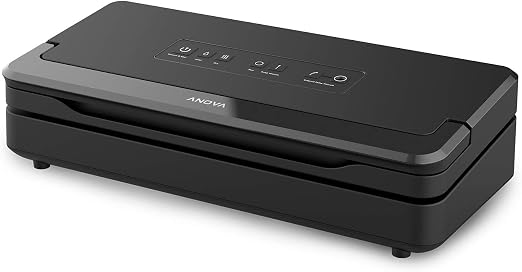
Anova Precision Vacuum Sealer Pro
Anova documents double sealing, bag storage, a cutter and operation intended for wet foods. Compare those features with your bag sizes and packing routine.
The double seam is useful to investigate, but it does not guarantee that a pack cannot leak or be punctured. Read the wet-food procedure rather than relying on a headline.
Check: Pro rather than standard model, electrical version, exact kit and current seller stock.
Check Anova Pro on Amazon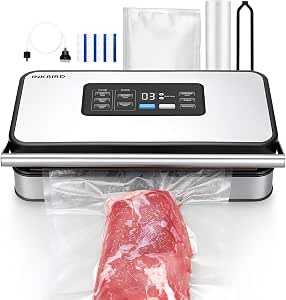
INKBIRD INK-VS04
INKBIRD documents a dual-motor, dual-pump machine with several food and operation options. Compare the actual controls, cleaning arrangement and supported bag dimensions.
A named model makes the instructions easier to investigate. It does not establish unlimited consecutive sealing or permission to pack any liquid-containing food.
Check: exact AU version, manual, pause requirements and replacement supplies.
Check INKBIRD on Amazon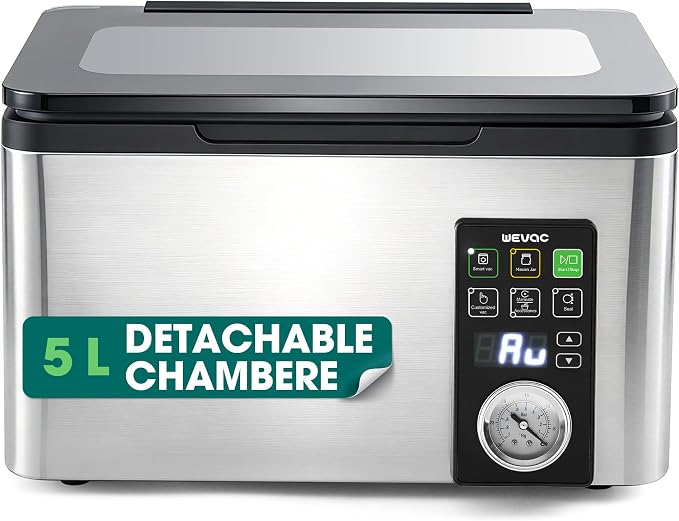
Wevac 30cm 5.3L listing
The supplied chamber listing describes a 30cm sealing system and a 5.3L chamber. Investigate it for a liquid-containing packing job that suits the exact model’s instructions.
The whole pouch needs the usable chamber, correct position and lid clearance. Litres alone do not tell you whether your portion fits.
Check: exact model, chamber drawing, approved pouches, pump care and regional version.
Check Wevac on AmazonCompare chamber options and fit. Do not transfer dimensions from a similar Wevac model.
The bag is part of the cooking setup
“Food-safe” does not answer every cooking question
Identify the exact bag material and its intended use. A bag sold for chilled storage, freezer use or repeated washing is not automatically specified for every sous vide temperature and duration.
Look for the cooking directions for that specific product. They should tell you which conditions the supplier supports and any restrictions on use. Do not transfer those instructions to a different bag simply because it has a similar appearance.
Also verify machine compatibility. Many external systems need suitable textured material, while many chamber systems support suitable smooth pouches. The exact bag and machine instructions take priority over a general category description.
A valve-bag setup is another system. Verify that the bag, valve and pump combination explicitly supports the intended cooking conditions before considering it. A reusable label alone does not establish that.
For more detail, use our sous vide bag guide and embossed versus smooth comparison.
Check before buying more supplies
What documentation have you confirmed?
This checklist highlights missing buying information. It cannot test a bag, approve a food process or certify that a particular combination is safe.
The seam and the pouch
Clean positioning matters more than a seal-count promise
Use the clear sealing allowance specified by the machine and bag instructions. Keep the opening positioned flat as directed and inspect the completed seam. A crease, contamination or damaged pouch is not corrected simply by choosing a more powerful pump.
Double-seal machines offer another feature to investigate. That feature does not establish the bag’s cooking approval or guarantee that damage elsewhere in the pouch cannot occur.
For bone-in food or other sharp parts, check suitable packaging and any approved protection. Do not improvise with materials that are not specified for the intended food and cooking use.
Liquid-containing food needs the correct procedure
A moist or wet setting does not automatically permit free liquid to reach an external machine. Read the exact food-condition instructions, including how the cycle is stopped correctly.
If that is a repeated packing job, investigate a suitable chamber system. Its pouch fit, permitted fill level, cycle procedure and cleaning requirements still need checking. Chamber ownership also brings different bench and maintenance needs.
Plan the packing session
Estimate preparation time from your actual timings
Use timings you have observed or limits specified by the exact manual. This planner estimates the packing session, including pauses between batches. It does not calculate water-bath heating, food cooking, pasteurisation or doneness.
Starting values are editable examples, not measured performance for the shortlisted models. Keep the food-handling plan separate from this arithmetic.
From packing to the bath
Keep portion shape and circulation in the cooking plan
Choose portions you intend to cook together and follow the validated method for their actual dimensions. Similar weights can have different thicknesses, so weight alone does not establish the required cooking time.
Do not crowd a water bath or stack bags in a way that conflicts with the cooker instructions and validated procedure. The equipment needs the permitted water level, positioning and circulation.
Use only accessories and positioning methods suitable for the equipment and intended cooking conditions. A bag that was correctly packed can still be used incorrectly in the cooking stage.
A vacuum machine does not resolve these cooking questions. Use the NSW Food Authority sous vide guidance alongside the equipment instructions.
Make the comparison concrete
Compare the job you actually repeat
A few individual portions
If your usual job is packing a few portions in compatible cooking bags, begin with the external models. Compare how you load a bag, operate the latch, stop a cycle and make a seal-only seam. Those are the actions you repeat every session, so clear controls can matter more than a long list of modes.
Check whether your preferred bag size works with the sealing area. Include the space needed to position the open bag in front of the machine. A body that fits on a shelf can still need more bench room during use.
Several different portion sizes
A roll and cutter may suit a routine with changing portion sizes. Ready-made bags may be simpler when your portions are similar. Compare both using the finished bag size you need, including the allowance required by the machine instructions. The advertised roll length alone does not tell you how many useful pouches it will produce.
Think about the bag opening as well as overall capacity. You need to load the food while keeping the sealing area in the condition required by the instructions. A narrow opening can be inconvenient even when the finished pouch looks large enough on paper.
Repeated packs containing liquid
Make this a separate comparison. Check the permitted procedure for the external model before treating its wet setting as the answer. If the job points toward a chamber, compare the actual internal drawing with a representative filled pouch. The sealing length and chamber volume describe different parts of the fit question.
Include lid clearance, access for cleaning and the machine’s weight in your workspace decision. Ask where it will sit during use and where it will go afterward. The better choice for a permanent bench position may differ from the better choice for a machine you move for every session.
A useful question for the seller
Give the seller the exact model name and ask for the manual, regional electrical specifications, compatible bag dimensions and included supplies. For a chamber listing, request the usable internal dimensions as well. Save the reply and compare it with the manufacturer documentation before relying on a feature headline.
Keep your own priorities short: your normal portion size, the food condition when packing, your working space and the bags you expect to buy again. These details make the Anova, INKBIRD and Wevac comparison much more specific than choosing by suction figures alone.
Choosing for your routine
Three practical ownership checks
Supplies
Compare usable bag sizes, cooking directions and replacement availability. A large starter-roll count is not automatically useful value.
Cleaning
Check access to trays and the sealing area, permitted washing and reassembly. Keep the electrical parts dry as instructed.
Session limits
Read cycle pauses, duty limits and maintenance before planning a larger packing job. A motor claim does not establish unlimited output.
For occasional portions, a straightforward external machine may suit the routine. For a repeated liquid-containing job, a chamber may deserve investigation. For limited space, compare storage and working dimensions rather than judging only the closed body.
Include replacement supplies and any needed accessories in the purchase comparison. Check actual delivered prices; manufacturer stock and marketplace sellers can differ.
Use our budget guide for machine-and-bag purchase arithmetic and our chamber guide for the fit and maintenance questions.
Cooking safety is a separate decision
The sealer cannot validate the food process
NSW Food Authority advises home cooks to understand the safety risks of sous vide. Use a validated method appropriate to the food and its dimensions; a water-bath setpoint or a good-looking seal does not by itself establish safe cooking.
Follow safe handling before packing, then the applicable cooking, serving, cooling and storage procedure. Vacuum packing does not sterilise food or create a new refrigerated shelf life.
If food will not be served immediately, follow validated cooling and storage guidance rather than leaving the pack at room temperature or assigning storage days from a machine advertisement.
Fish in reduced-oxygen packaging has additional handling and thawing considerations. Use the food’s specific instructions and our fish packing guide for source-backed buying and handling checks.
This article compares packing equipment. It does not provide a cooking-temperature table, pasteurisation calculator or universal storage-life recommendation.
Before ordering
Bring the three checks together
- Machine and exact version.Confirm the model, electrical requirements, controls, bag dimensions and current seller bundle.
- Bag and approved conditions.Check the exact material, machine compatibility and intended cooking temperature, duration and method.
- Packing and seal inspection.Use the permitted food condition, positioning, seal allowance and operating procedure.
- Validated cooking process.Match the method to the food and actual dimensions. Include the cooker instructions and handling requirements.
- Care and ongoing supplies.Check cleanup, pauses, maintenance and replacement bags before comparing delivered cost.
Practical answers
Vacuum sealers for sous vide FAQs
Which vacuum sealer should I compare first for sous vide?
Start with the Anova Precision Vacuum Sealer Pro and INKBIRD INK-VS04 for an external-sealer setup. For liquid-containing packs, investigate the supplied Wevac chamber listing and its exact procedure. Match the machine, approved cooking bags and validated cooking method separately.
Do I need a vacuum sealer to cook sous vide?
Use the packaging method specified by your validated cooking procedure and equipment instructions. A vacuum sealer is one way to prepare compatible bags; owning one does not by itself establish a safe sous vide process.
Are all vacuum bags suitable for sous vide?
No. Check that the exact bag is specified for the intended cooking temperature, duration and method. Food-safe, freezer-safe or reusable labels alone do not establish sous vide suitability.
Does a double heat seal guarantee a bag will not leak?
No. It is a feature to investigate, not a guarantee. Bag material, positioning, seal cleanliness and damage elsewhere in the pouch still matter. Inspect the pack as the instructions require.
Can a moist-food mode handle free liquid?
Do not assume that a moist setting permits free liquid to enter an external machine. Follow the exact model instructions. For liquid-containing packs, investigate an appropriate chamber system and its permitted procedure.
Can I use valve bags and a handheld pump for sous vide?
Only use the exact bag, valve and pump combination when its instructions explicitly support the intended cooking conditions. A reusable valve bag or freezer-safe label does not automatically establish suitability.
Does the packing-session planner calculate cooking time?
No. It estimates preparation, machine-cycle time and between-batch pauses from your inputs. It does not calculate food heating, pasteurisation, doneness or safe cooking time.
Does a vacuum-packed portion automatically become safe in a water bath?
No. Sous vide requires appropriate time and temperature control for the food and its dimensions, with a validated process. Vacuum packing does not sterilise food or replace safe handling.
Can I cool and store sous vide food without a separate plan?
Follow validated cooling and storage guidance if food is not served immediately. The packaging machine does not validate cooling, refrigerated shelf life or reheating. Follow food-safety guidance and the cooking procedure.
Choose the packing job first
Compare the external candidates for ordinary compatible bags. Investigate the chamber option for a permitted liquid-containing procedure. Then confirm the exact bag’s cooking use and the validated food method independently.
Research and sources
We used the supplied Anova Pro, INKBIRD VS04 and Wevac links and images, checked named-model features and consulted NSW Food Authority guidance. We have not measured comparative sealing performance or validated any recipe.
Interactive results reflect your entries. The documentation checklist cannot assess the actual documents, and the time planner estimates packing only. Exact seller variants, prices and included supplies still need confirmation.
- Anova: Precision Vacuum Sealer Pro
- INKBIRD: INK-VS04 features and manual
- Wevac: exact-model manuals and downloads
- NSW Food Authority: cooking sous vide
- FSANZ: food safety basics
Read our affiliate disclosure. Prices and availability can change. Diagrams explain buying checks and do not represent product-test results.